Small-Pitch Duels
Small-Pitch Duels is the shelf for two people and one device: alternating turns or a split screen, on one cheap phone resting between you.
50 · short matches, cool phone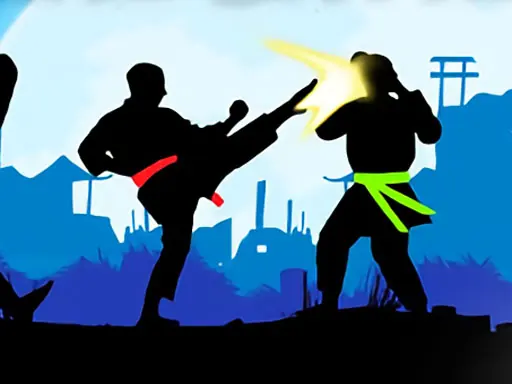 Karate Fighter
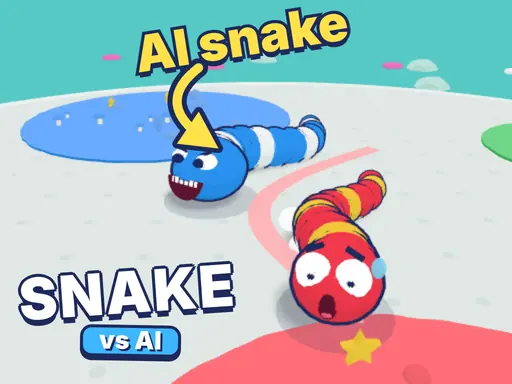 Snake VS AI
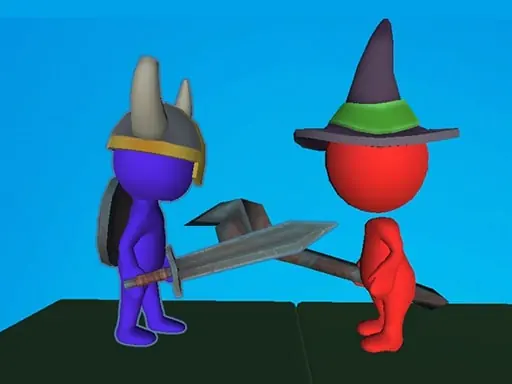 Castle Wars: Cell Battle
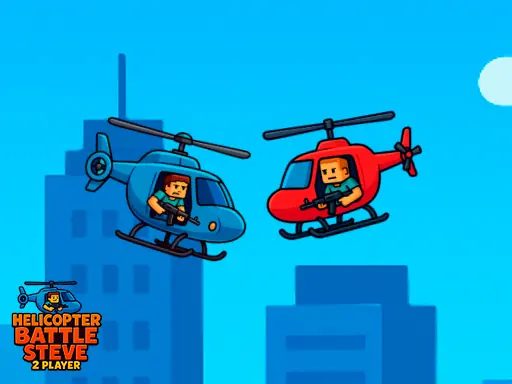 Helicopter Battle Steve 2 Player
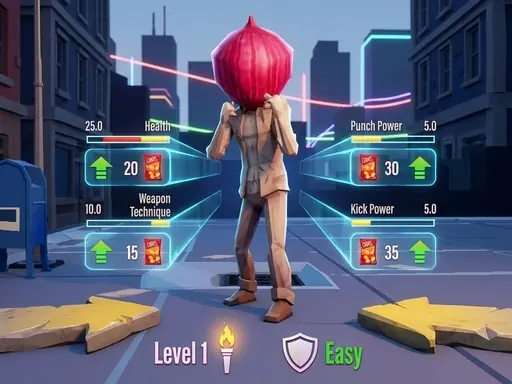 Apex Combat
 Brainrot Bridge Race 3D
 Dominoes classic duel
 Tec Tak Toe Pro
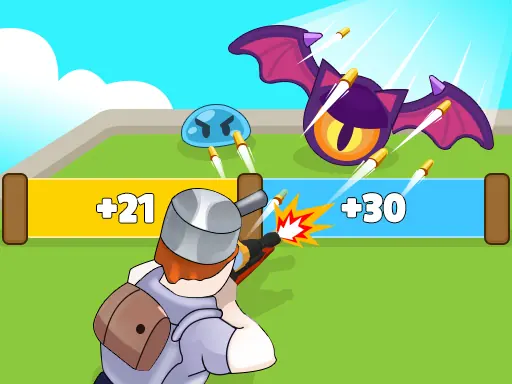 Mob Handler
 Survev.io
 Hatchling Heroes Arena
 Mega Crowd
 Hole Upper For 2 Players
 Stickman Archer Bow Fight
 Minecraft Battle Party
 Bubble War
 Battle of the Minds
 Brawl Stars 2
 Stick Warrior
 SPOOKY BOXING
 Boss Hunter Run
 Draw War
 Squid Game: Craft Runner
 Finger Soccer : Footbal Game
How Small-Pitch Duels plays in the browser
Every game here marks turns explicitly, prints the score large enough to read at arm's length, and ends a match on a short verdict instead of a complicated chart. It is also the shelf that fits the office cup: eight players, a paper bracket, three minutes a match. We drop titles needing two accounts or two devices, because this site's rule is a shared pitch — the person sitting next to you is the best opponent you have.
All 50 games in this section run inside the tab: no install, no account, no download. Tap a title and the game opens on this same page.
- One tab, one game. Close the tab and the session is over.
- Finger controls or keyboard, depending on the title.
- Scores stay in this browser, so there is no account to maintain.
Three titles to open first
Picked from the 50 titles in this section.
- Karate FighterKarate Fighter is a browser Small-Pitch Duels game you can start…
- Snake VS AIOpen Snake VS AI and you are already playing — no login wall, no…
- Castle Wars: Cell BattleCastle Wars: Cell Battle is one of the easier Small-Pitch Duels…
An older phone is enough
Every title here is built for a phone screen. Pages open in a couple of seconds on a mid-range handset, and you can close the tab without losing anything.
Duel situations and the right first response
A small-pitch duel is decided in the first half second. The table pairs each situation in Small-Pitch Duels with the response that keeps the ball.
| Situation | First response | What to avoid | Why it works |
|---|---|---|---|
| Back to goal, defender tight | Shield with the far foot | Turning into the defender | The ball stays on the safe side |
| Facing a defender at speed | Push the ball past and run | Slowing to dribble | Speed beats a standing tackle |
| Two defenders, one ball | Pass early to the free side | Trying to split them | The free player is the advantage |
| Loose ball between two players | Step across, not toward | Reaching with the leg | The body blocks the path |
| Defender arriving from behind | Turn away from the pressure | Turning into the tackle | The turn buys a second |
| Keeper off the line | Low shot to the far post | Lifting the ball | Low shots arrive before the keeper recovers |
Every duel has a first response that keeps the ball and a second that loses it. The first half second is the whole skill.
Five steps to win a one-against-one
Winning a duel is not about a trick. It is about the angle of approach and the timing of the touch.
- Approach at an angle, not straight onA straight approach gives the defender a fixed target. An angled approach opens one side before you touch the ball.
- Touch the ball out of your feetA close touch invites a tackle. A touch half a metre ahead buys the time to change direction.
- Change pace, not direction firstA sudden acceleration beats a step-over at this level. Most defenders commit to the pace, not the feint.
- Keep your body between ball and defenderPosition, not skill, protects the ball. Turn your back to the defender only when you have space to turn into.
- Decide before the second touchThe second touch should already be the shot or the pass. A third touch in the box is a lost chance in Small-Pitch Duels.
One change of pace and one angled approach win more duels than any amount of dribbling practice.
Four terms for small-pitch duels
Duel language is short and physical. Each term names a moment you can practise on its own.
- First touch
- Where the ball ends up after it arrives. A first touch into space is worth more than a good dribble.
- Cover shadow
- The area a defender blocks without tackling. Standing in a cover shadow is often better than diving in.
- Second ball
- The loose ball after a challenge. Most small-pitch goals come from second balls, not first ones.
- Recovery run
- The run back after losing the ball. The first three seconds after losing it decide whether the duel is repeated.
- Scan before you receive
- One look over the shoulder before the ball arrives tells you where the pressure is coming from.
- Stay on your toes
- Flat feet lose every duel. The first movement is a small step, not a lunge.
- Use the touchline as a defender
- The line is a free extra defender. Show the attacker toward it rather than into the middle.
- Win the second ball
- The first challenge is rarely clean. Arriving second but first to the loose ball wins the duel.
- Communicate the switch
- A duel won is often a pass backwards. Saying 'switch' early turns pressure into possession in Small-Pitch Duels.
- Practise the turn, not the trick
- A reliable turn away from pressure beats an unreliable step-over every time.
- Talk before the duel starts
- A single word to a teammate before contact creates the passing option that wins the duel.
- Stay low on the turn
- Standing up during a turn loses the ball. Turning low keeps the body between ball and defender.
- Call the man, not the ball
- One voice names the player; the other names the space. Two voices calling the ball is how a duel is lost.
- Win the first contact
- The first contact decides the duel even when the ball is not won. Make the opponent feel it in Small-Pitch Duels.
Practise the first touch and the recovery run; the tackle itself is the smallest part of a duel.
Questions players actually ask
Why do I lose every close fight?
Because you are attacking when you should be spacing. In small-arena fighting games, distance decides more fights than damage. Stay just outside your opponent's reach, let them whiff, then punish. Attacking first is how close fights are lost.
What is the best way to block?
Block high by default and react low. Most players open with a high attack, and low attacks are slower and easier to see. If you are being thrown repeatedly, block less and move more - throws beat blocking, movement beats throws.
Why does my combo drop in the middle?
Because you are pressing the next input before the previous animation finishes. Combos in these games have fixed timing windows; pressing early cancels the buffer. Practise the combo in training mode until the rhythm is automatic, then use it in a match.
Should I use a character with high damage or high speed?
Speed first, damage later. Fast characters teach spacing, because their reach forces you to learn distance. Heavy characters let you win early matches with damage while hiding bad habits that lose later matches.
Why do I get cornered so easily?
Because you retreat in a straight line. Retreat diagonally, or step through the opponent when they commit. Being cornered is rarely about the opponent's pressure; it is about the direction you chose to escape.
How do I deal with a player who spams one move?
Punish the recovery, not the move. Every repeated attack has a recovery window; block once, then attack during that window. Spamming works only against players who keep attacking into it.
Why does my health drain faster than my opponent's?
Because you are trading hits instead of winning exchanges. Trading is fine when you have more health; it is a losing plan when you do not. Check the health bars before deciding to trade - most players never look.
Is there a reason to use light attacks?
Yes: they are faster, safer, and they start combos. Heavy attacks win single exchanges but lose rounds because a whiffed heavy is a free punish. Use light attacks to open, heavy attacks to finish.
Why do matches feel laggy in two-player mode?
Because local two-player modes still process both inputs and often run two camera views. Close background tabs and reduce the window size. If the game has a performance mode, enable it - input delay matters more than visual quality here.
How many matches should I play before judging a character?
Ten. Fighting games have a learning curve per character, and the first three matches are always bad. If a character still feels wrong after ten, the issue is the matchup, not the character - try a different opponent before dropping it.
Player notes
I attacked first and lost every close fight. Spacing and punishing whiffs turned it around.
Player note, arena-fighting regular
My combos dropped because I pressed early. Waiting for the animation to finish fixed the timing.
Player note, plays on a phone
I picked the heavy hitter and won early, then hit a wall. Switching to a fast character taught me spacing.
Player note, learning characters
Quoted and condensed from public player discussions; names shortened.
Common questions
- Do I need an account to play?
- No. All 50 games in this section play without registration: no email, no password, no verification step.
- How long does one session take?
- Most titles finish in three to ten minutes, which fits a break without leaving anything half-done.
- Is my score saved?
- Your best score stays in this browser as long as site data is not cleared. No account also means no sync across devices.
Further reading
- Picking your first match on a weak phone: three checks before you tap
- A full match in three minutes: quick-play rules for the break
- One-thumb control: the right standard for mobile sports games